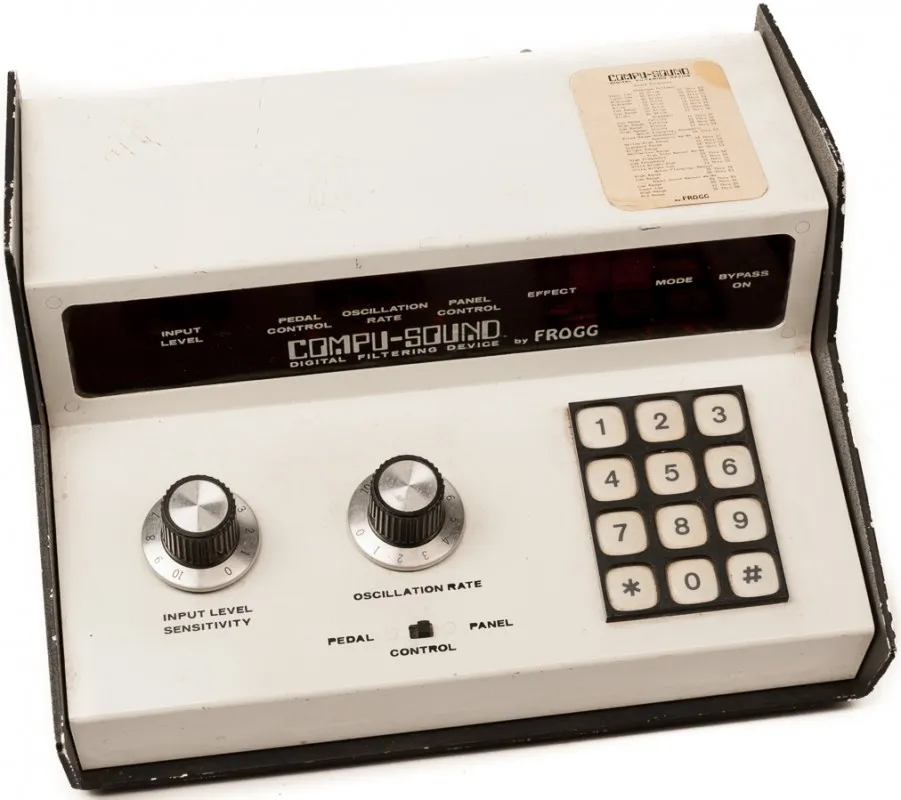
Compu-Sound - Digital Filtering Device
The Frogg Compu-Sound: A Pioneering Digital-Analog Hybrid In the 1970s, when digital technology was still a novelty in the world of music gear, the Frogg Compu-Sound stood out as a trailblazer. This innovative multi-effects processor, produced between 1976-1977, combined the precision of digital control with the warmth of analog circuitry, offering guitarists, bassists, and keyboardists an unprecedented level of sonic versatility. Beneath its sleek, futuristic exterior, the Compu-Sound concealed an all-analog signal path, with a microprocessor-driven digital interface providing instant access to 99 factory presets. This unique blend of analog and digital elements represented one of the earliest examples of digitally managed effects hardware, foreshadowing the hybrid designs that would later become the industry standard. The Compu-Sound's vast sonic palette spanned from subtle, frequency-driven filters to pronounced wah and flanger tones, with categories like Envelope Follower, Automatic Wah-Wah, and Arpeggio. Users could seamlessly transition between these drastically different effects, thanks to the device's lightning-fast recall capabilities and intuitive control layout. Reportedly used on the iconic Saturday Night Fever soundtrack, the Compu-Sound's bold marketing claimed it could replace an entire pedalboard, offering a level of versatility that was truly revolutionary for its time. Though its commercial run was short-lived, this rare and highly collectible device stands as a testament to the pioneering spirit of its creators, Dick Norse and Doug Talley, and the rapid evolution of music technology in the 1970s.