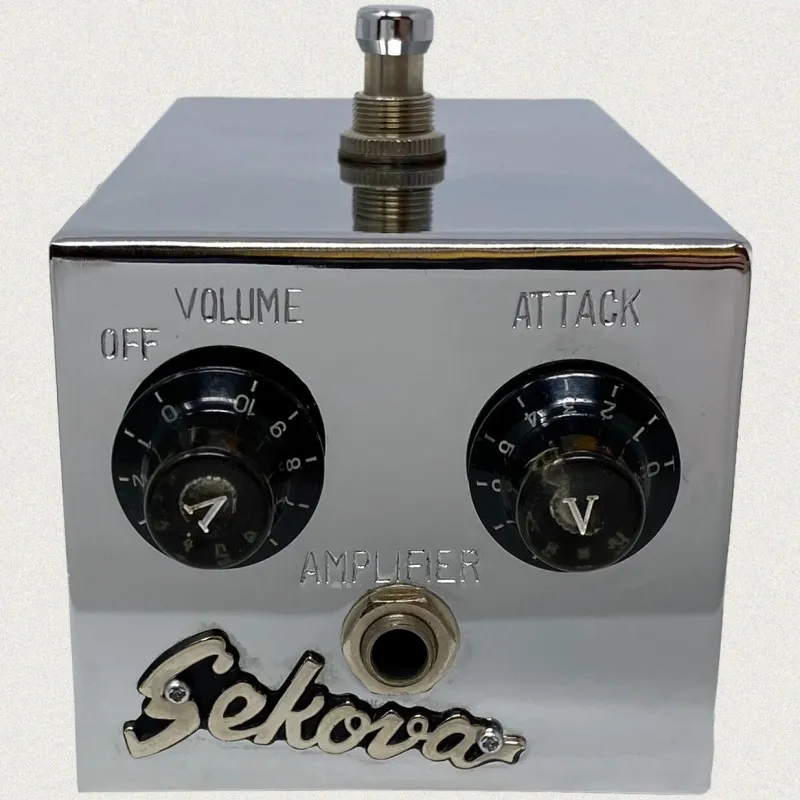
Model No. 59 Distortion Box
The Sekova Model No. 59 Distortion Box is a rare and fascinating piece of effects pedal history. Emerging from Japan's burgeoning post-war electronics industry, this vintage fuzz unit offers a raw, aggressive tone that perfectly captures the wild spirit of 1960s garage rock. With its distinctive wedge-shaped chrome enclosure and minimalist two-knob layout, the Sekova Fuzz bears a striking resemblance to early American designs like the iconic Maestro FZ-1A. However, analysis reveals this pedal's origins lie firmly in Japan, likely manufactured by the pioneering effects company Nisshin Onpa (later Maxon). This connection to Japan's early effects pioneers makes the Sekova an important footnote in the globalization of guitar tone. Powered by a simple three-transistor circuit, the Sekova Fuzz dishes out a raw, snarling distortion that's perfect for dirty riffs and scorching lead lines. The Volume and Attack controls allow players to fine-tune the balance of gain, compression, and bite to taste. Rare three-knob variants even offer a basic tone control, expanding the pedal's sonic versatility. Though obscure today, the Sekova Fuzz played a pivotal role in introducing Japan's burgeoning effects industry to the world. Its shared DNA with other early export and domestic designs hints at a fascinating OEM manufacturing story, paving the way for the iconic Maxon and Ibanez pedals that followed. For vintage gear enthusiasts and tone chasers alike, the Sekova Fuzz remains a compelling and historically significant piece of equipment.